

 Français
 Español
 Deutsch
 Italiano
 Português
AI Images and Commercial Use: What to Check
Tool license, rights in the image, trademarks, real people, transparency: what to check before using an AI image to sell.
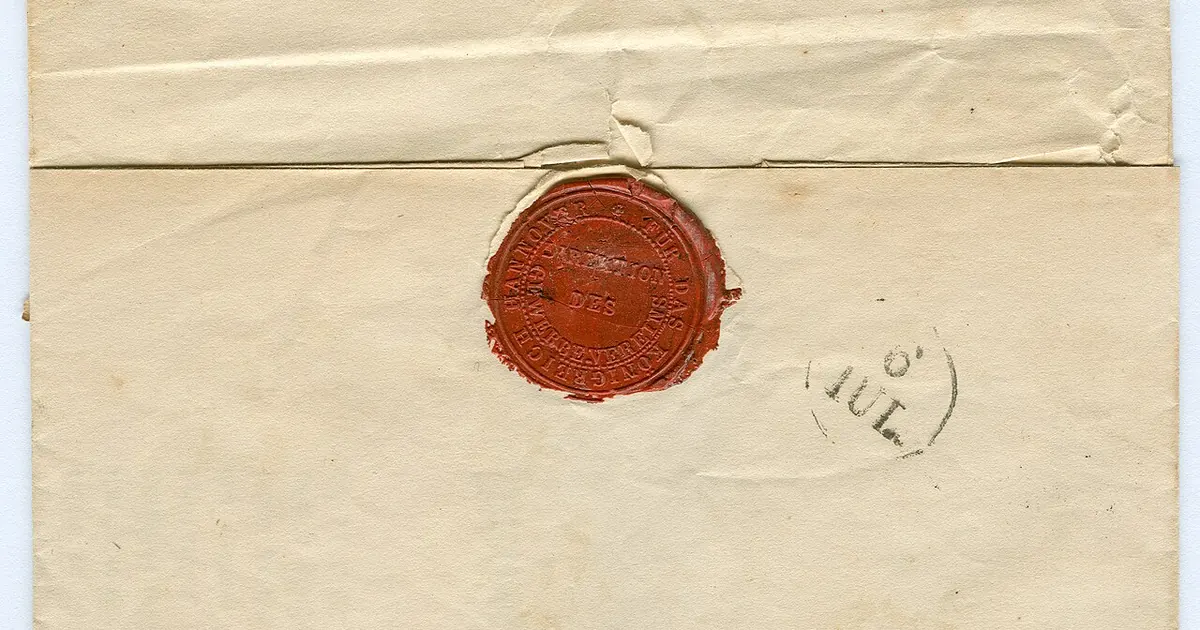
"I generated this image with my subscription, so it belongs to me and I can do what I want." That sentence mixes three separate questions: what the tool allows you to do, what the law protects, and what the image contains. You can be fine on the first and have a problem on the third.
What follows is a checklist, not legal advice. AI law is moving, terms of use change, and answers vary by country and by use. Read your tool's current terms on the day you need them. If the stakes are high, like a campaign, a logo, or a product sold at scale, consult an intellectual property attorney.
First, check what your tool says
Each service has its own rules, and they may depend on your plan. Ask the same questions every time: can I use the images commercially? On which plan? Does the provider keep a license over what I generate? Are my images public? Is there a warranty in case of a claim?
| Tool | Points noted at the time of writing | Where to check |
|---|---|---|
| Midjourney | You own the rights to your creations to the extent permitted by applicable law. Companies above an annual revenue threshold ($1 million) must have a Pro or Mega plan. By default, images are visible and reusable by others, and Midjourney receives an extended license. Upscaling another user's image doesn't give you its rights | Terms of Service and the "Using Images & Videos Commercially" page |
| Stable Diffusion | The license depends on the model. Stability AI's community license covers organizations under $1 million in annual revenue; above that, an enterprise license must be requested. Community models and LoRAs each have their own license | Stability AI's license page and the page of each downloaded model |
| Adobe Firefly | Adobe presents commercial use as possible, with nuances for beta features and a warranty reserved for certain plans | Adobe's terms and the Firefly legal FAQ, in their current version |
| ChatGPT, Gemini, others | Rules vary by provider, plan, and country, and a paid professional plan may have different terms than a personal account | Each provider's terms of use and usage policies |
This table summarizes and simplifies: only the version of the terms currently in force is authoritative. A chatbot can help you see more clearly, as long as you check its answers against the original text:
Here are the terms of use for [TOOL NAME], version dated [DATE]: [PASTED TEXT].

My intended use: [DESCRIPTION, FOR EXAMPLE IMAGES FOR ADS ON A SMALL BUSINESS'S SOCIAL MEDIA]. My plan: [PLAN].

Answer solely from this text, quoting for each point the exact sentence that supports it:
1. Is commercial use allowed for my plan?
2. Who owns the rights to the images, and what license does the provider keep?
3. Are the images public by default?
4. Which content restrictions apply to me?
5. Does the provider offer a warranty, or disclaim liability?

If the text doesn't answer a question, write "not specified." Don't give legal advice.
Allowed by the tool doesn't mean protected
Even if the tool hands you everything it can, that doesn't necessarily create a copyright in the image. Midjourney puts it its own way: its rights apply to the extent permitted by applicable law, and the service refers you to an attorney for copyright questions.
In the United States, the Copyright Office published a report on this subject in January 2025. It finds that with current technologies, prompts alone don't give the user enough control to be the author of the output, and that human contributions (retouching, assembly, added original creation) are assessed case by case. In France, copyright rests on the originality of a work, one that bears the stamp of its author's personality. How that criterion applies to generated images is still debated.
The practical consequence is simple: assume you might not be able to stop a competitor from reusing your generated image. For a logo or a brand identity, that risk really matters. Having a human draw the final version remains more defensible, with no guarantee.
Look at what the image contains
The content often carries more risk than the tool. Before publishing, check these four points.
Trademarks and logos. A distorted logo on a bag, a recognizable bottle shape, a car grille: the AI sometimes slips these in without you asking. Zoom in, and remove them.
Existing works and characters. An image that closely resembles a well-known work or character can cause problems, even unintentionally. Asking for a protected character by name exposes you more, as does imitating a living artist. Our article on art styles shows how to do without.
Real people. Depicting an identifiable person without their consent implicates image rights. In France, article 226-8 of the Code pénal also targets algorithm-generated content that reproduces a person's image without their consent, if its artificial nature is neither obvious nor disclosed. The CNIL has a page on deepfakes, as well as remedies.
Misleading claims. An image can be free of rights and still be misleading. A dish you don't serve, a product that looks better than the real thing, a fake satisfied customer: the issue may then fall under consumer protection law. Show your real products when the image is used to sell them.
To reduce risks from the generation stage, add explicit instructions to your prompt, which doesn't replace your visual check:
photograph of [GENERIC, UNBRANDED OBJECT] on [SURFACE], unbranded packaging, blank labels, generic design, no recognizable logos or product shapes, no people, soft daylight, plain background, [PALETTE] colors
Your data and your clients' data
The question also runs the other way: what you send to the tool. A client's sketch or the visual of a product not yet launched is sensitive, and some services make them visible depending on the plan. On Midjourney, the private option is reserved for certain plans, and doesn't apply retroactively to images already created. A photo of an identifiable person is personal data: the article on what not to paste into a chatbot details the habits to adopt, and the CNIL remains the reference in France.
Transparency: do you have to say an image comes from AI?
Article 50 of the EU AI Act has applied since August 2, 2026, with a grace period until December 2, 2026 for providers of systems already on the market to apply technical marking of content. Among other things, it requires a professional who distributes a deepfake, meaning generated or manipulated content that resembles real people, places, objects, or events and could pass for authentic, to disclose it. For clearly artistic or fictional works, the obligation is lighter. The European Commission publishes guidelines and a code of practice on the subject: refer to the current versions.
A drawn illustration doesn't present itself as reality, unlike a fake photo of an event. Even without an obligation, the label "AI-generated image" costs little. Advertising platforms, stock image libraries, and social networks also have their own rules: read them before publishing.
The check to run before publication
If you deliver images to clients, put in writing what was generated and with which tool, and don't grant an exclusivity guarantee you can't keep. Have a professional review the clause if you're making this a regular business.
Also keep a record for every image that matters: tool, plan, date, prompt, and a copy of the terms at the time of generation. This file of a few lines will help you if a question comes up a year later.
For your next commercial visual, run your current tool's terms through the analysis prompt above, then check each answer against the original text before publishing.
Read next
AI images
Inpainting: Fix Part of an Image Without Redoing It All
A six-fingered hand, an extra object, botched text: how to mask the area and regenerate only that part, with an example prompt and the limits to know.
3 min read
AI images
Creating a Logo With AI: What Works, What Gets in the Way
An image generator offers symbol ideas, not a finished logo. How to explore, test, have it vectorized, and check before adopting yours.
5 min read
AI images
Consistent Characters in AI Images: The Image-by-Image Method
Character sheet, reference images, Midjourney, Stable Diffusion: how to keep the same face and the same outfit from one image to the next.
5 min read