

 Français
 Español
 Deutsch
 Italiano
 Português
Copyright and AI-generated text
Is a text written with an AI protected? Who owns it? Guidelines for publishing, selling, or delivering to a client, and questions to ask a lawyer.
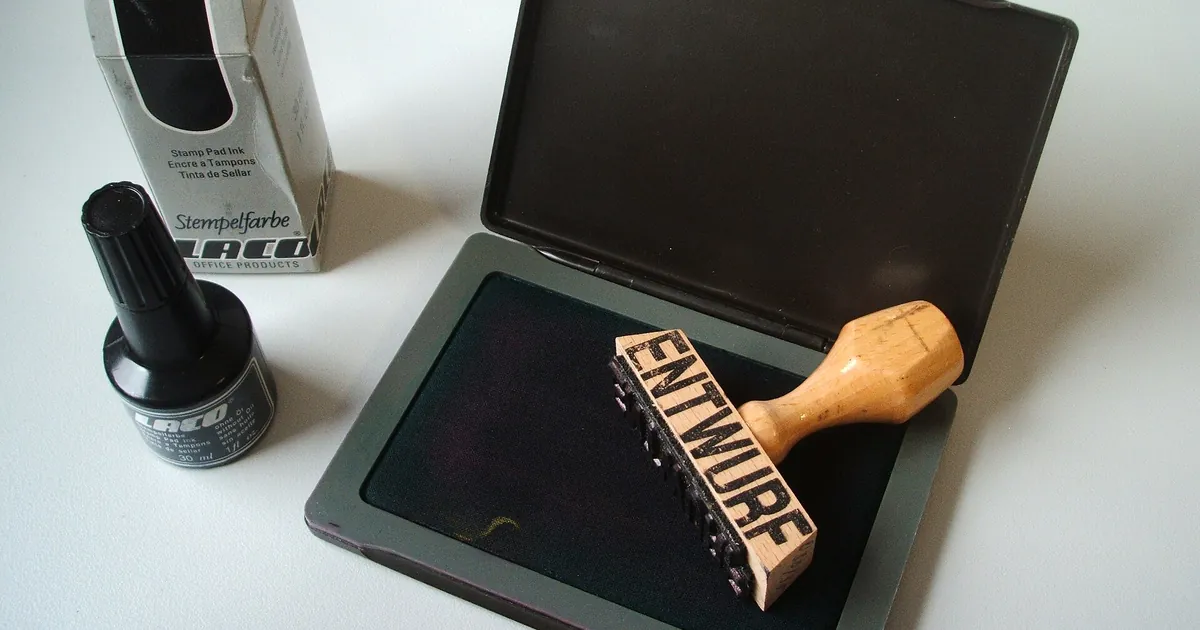
The communications manager of a heritage preservation nonprofit has an AI write the text of a twenty-page brochure. She edits it, prints it, then discovers that another organization is copying whole paragraphs onto its website. Can she have them taken down? And does the text really belong to her, when the machine wrote most of it?
This article gives guidelines, not legal advice. The law on AI is changing, it varies from country to country, and concrete cases are decided one by one. For a decision that involves money or a business relationship, the answer comes from a lawyer.
The starting principle: the author is a person
Under French law, as in most copyright systems, copyright protects an original work, meaning one that bears the stamp of a person's creative choices. The author is a human being. A machine can't hold copyright.
This raises a question the law doesn't clearly settle for now: when a tool produces a text from a simple request, is there an author? Two opposite situations are fairly clear:
- a text you wrote yourself and that the AI only proofread or corrected remains your text;
- a text produced entirely from a short instruction, without you making any creative choice about its form, may not be protected at all.
Between the two, everything is a matter of degree: what you contributed, chose, organized, rewrote.
What the US position says, as a reference point
In January 2025, the US Copyright Office published a report on the protection of works created with AI. Its conclusion is that a prompt alone isn't enough to make you the author of the result, because you don't control how the tool produces the final expression. On the other hand, what you write yourself, what you select, and the way you organize and modify the generated content can be protected. This report doesn't apply in France, but it gives an idea of the direction of the debate: what can be protected is your human contribution.
What this changes in your practice
The more you step in, the better. A text that you structure, rewrite, and complete with your own experience and examples is more likely to be yours than a text copied as is. Style work is a good example: getting the AI to write in your style already assumes you're bringing personal material.
Keep a record. Keep your drafts, your notes, the successive versions. If a dispute arises, being able to show what you wrote and changed helps you defend your contribution.
Don't count on strong protection for raw text. If your value rests on a text generated with almost no editing, someone who copies it will be hard to stop. What holds up better is the whole you built: the selection and arrangement of the elements, the original illustrations you made, the editorial work.
The other risk: reproducing someone else's work
A model can sometimes produce a passage very close to an existing text, a famous line, song lyrics, or the outline of a reference article. This risk is low for ordinary text, more serious for very specific texts or for requests like "write in the exact style of such-and-such a living author."
A few habits reduce your exposure. Supply your own facts and your own examples rather than asking for a text "in the manner of" a specific work. For a text that will be widely distributed, copy two or three key sentences into a search engine and see whether they exist elsewhere. And don't hand the AI other people's copyrighted texts, without permission, to rewrite: the result is still an adaptation of the original text.
There are also disputes over the data used to train models. They concern the companies that built them more than your uses, but it's worth following the news if you publish at scale.
Tool terms and contracts
Each tool states in its terms of use what you can do with the content it produces, including commercial use. Read them for the plan you use: a free plan and a professional plan don't always provide the same thing.
If you work for clients, put things in writing. A client may require you to assign them the rights to what you deliver, or to state that you haven't used AI. Others accept it. Since you can't assign a right you may not have, have a lawyer draft or review the clause. The prompts for freelancers cover the practical side of the trade, and the article on commercial use of AI images deals with the same subject on the image side.
Finally, European rules on transparency for AI-generated content exist or are being put in place. Depending on your business, you may have to indicate that content is generated. Find out what applies to your case.
Preparing for your meeting with a lawyer
If you have to make a decision (assignment to a client, publishing a book, selling content), save time by preparing your situation before you call. An AI can help you put it into shape:
I am the communications manager of a nonprofit. We published a brochure in which about [SHARE] of the text was written with [TOOL] and then edited by me. I want to know whether we can stop another organization from copying it.

Prepare a list of questions to ask an intellectual property attorney: the facts they will need to know, the documents to bring, and the points where the answer may vary by country. Do not give any legal answer yourself.
The tool doesn't replace the lawyer. It helps you show up with the right documents and the right questions.
To do this week
Open the terms of use of the tool you use most and find the sentence that says who owns the content it produces. Write it down somewhere, with the date you read it. Then, for your next important text, keep the draft you wrote before running it through the AI.
Read next
Understanding AI
Generative AI vs. Search Engine: Each Has Its Role
A search engine finds pages, an AI writes an answer. Which tool to use for opening hours, a legal rule, a draft, or a comparison.
3 min read
Understanding AI
Chatbot memory: what they really remember
Within a conversation, within a project, or from one session to the next: what chatbots remember, how to control it, and what to tell them never to keep.
3 min read
Understanding AI
AI temperature: what the settings really change
Temperature, top-p, maximum length: what these sliders are for, when to touch them, and how to get the same effect without access to them.
5 min read